

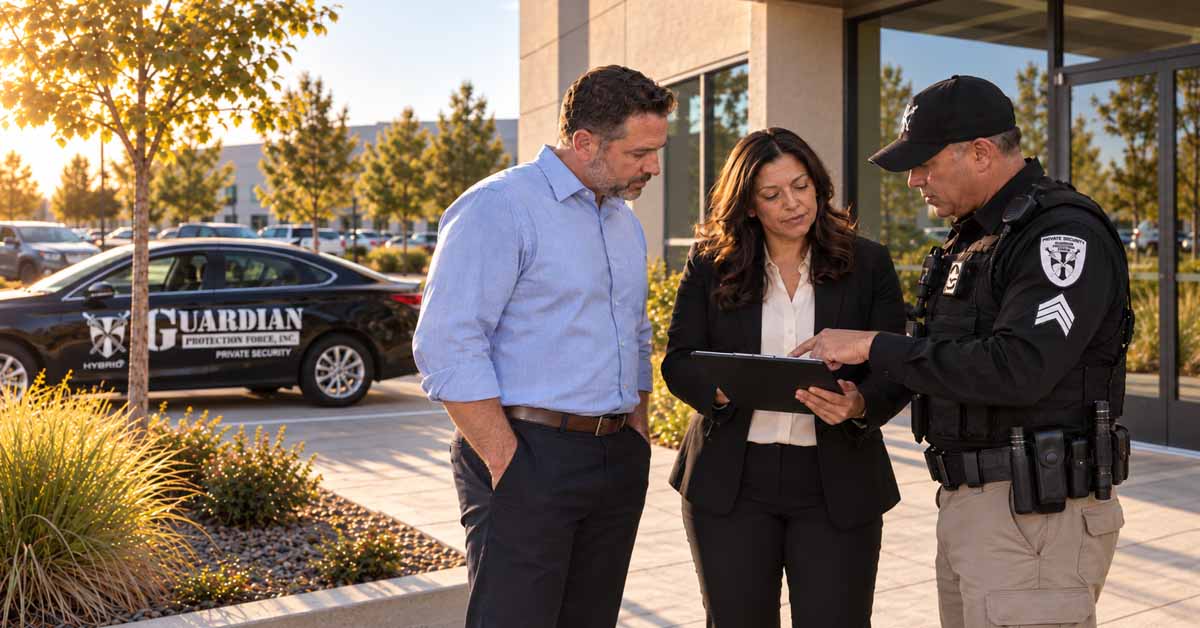

Five Questions to Ask During National Preparedness Month
If an emergency happened at your business this afternoon and you were unreachable, who would take charge?
Would your employees give you the same answer? Would your security officer?
This September we want to encourage to ask these difficult questions and begin your journey to emergency preparedness.
National Preparedness Month is a useful reminder to check supplies, update contact information and talk through what could happen. Sacramento County’s September guidance covers those household essentials. For business owners, there is another responsibility: making sure the people who work in, visit and protect our facilities know what to do together.
Emergency preparedness for Sacramento businesses starts with knowing who is responsible, how to communicate when normal systems fail, and what to do when a situation unfolds. A written plan is a starting point, but your team needs to understand it and practice putting it into action. To help you assess where your business stands and where it needs attention, we’ve developed five questions to work through with your team.
Question I: Who takes charge when the usual person is unavailable?
Name a primary lead and a backup for each shift. Make sure employees know how to report an emergency, who communicates instructions and who accounts for employees

Then look at your staffing outside normal business hours. An office in Rancho Cordova may have a full management team on site at 10 a.m. and one employee closing at 7 p.m. Those people need instructions that fit the conditions they actually work in.
As a business owner, I want a plan that still works when I am unavailable. That requires giving people clear direction before they need it.
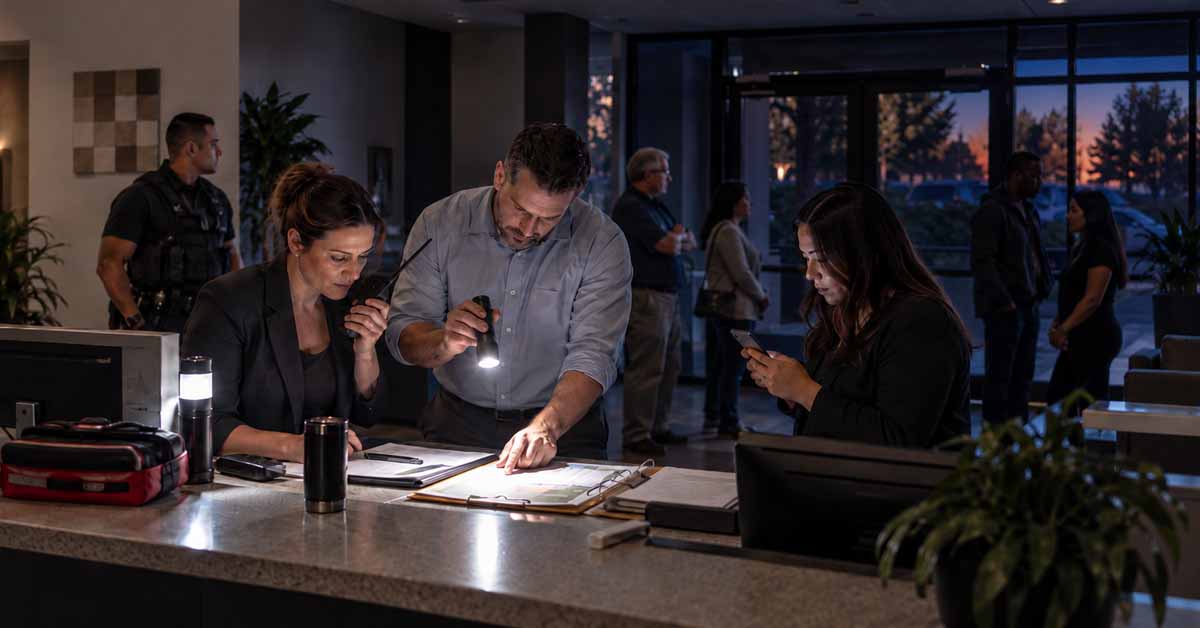
Question II: Can your team communicate when the power goes out?
Write down your backup communication method and test it. Keep essential numbers accessible without a network
connection. Decide who monitors official alerts, who relays verified information and how the next shift receives an update.
Sacramento County identifies hazards including wildfire, flooding, extreme heat and power outages. Its Sacramento Alert system can deliver emergency information by phone, text and email. Businesses should also know the evacuation zone for their location and follow official instructions. For properties outside the county, identify the appropriate local alert system.
Find Sacramento County emergency alerts and preparedness resources
Your employees may be trying to reach their families during the same incident. Build that reality into your communications plan. People need a workable way to check on home while receiving clear instructions at work.
Question III: Does your security team know its role?
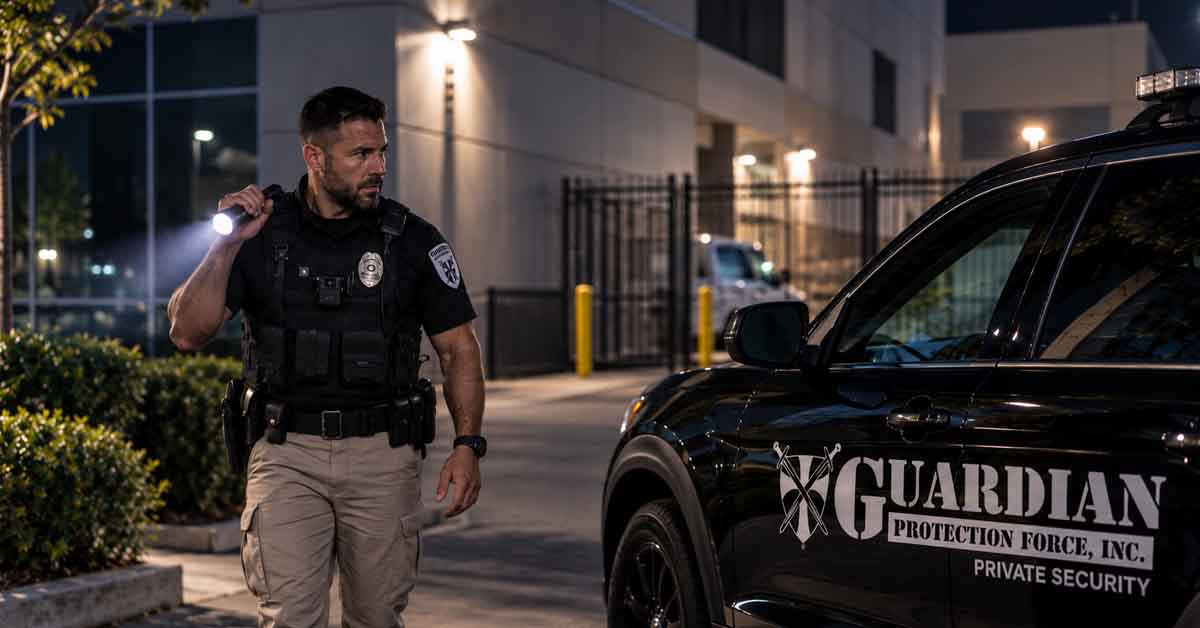
If you have security officers on site, include them in the planning conversation. Review their post orders alongside your emergency procedures so the instructions agree.
Depending on the assignment and training, an officer may help communicate directions, support access control, guide responders to the correct entrance or document what happened. Be specific about who handles each responsibility and who provides backup.
An armed security officer’s presence does not settle these questions. The officer still needs current contacts, site knowledge and clear expectations. Security personnel should work within their training and assigned duties, follow public safety directions and avoid delaying evacuation to protect property.
Walk the site with your provider. Can responders find the building after dark? Is the designated assembly area accessible? How will you account for contractors or visitors who are unfamiliar with the property?
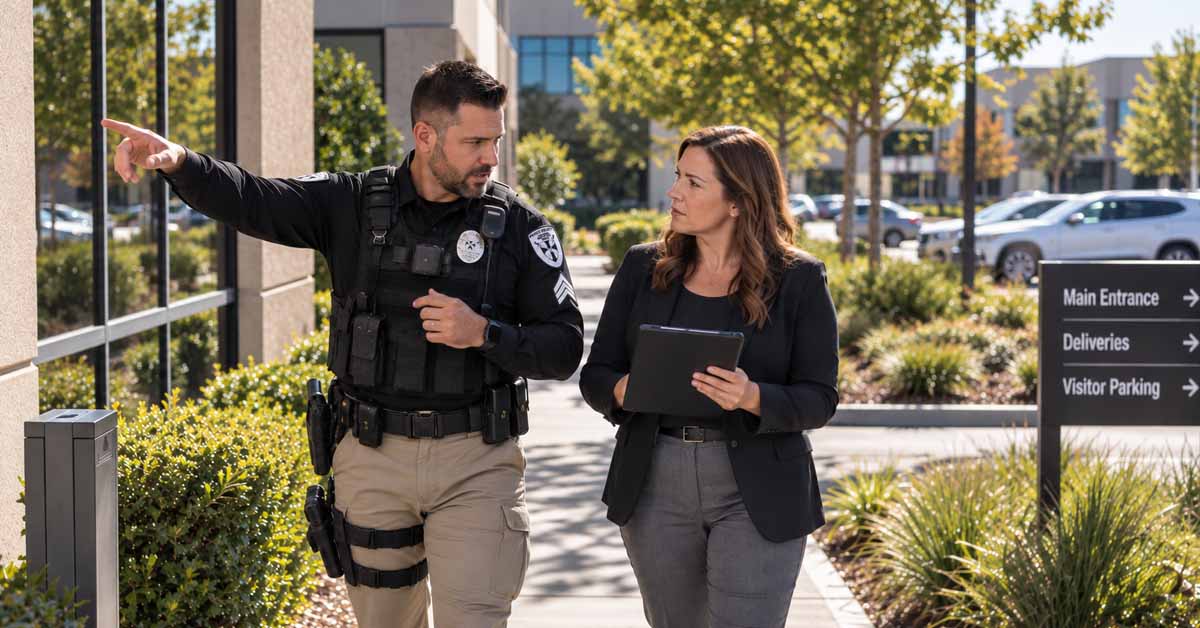
Plan assistance for people with disabilities before an emergency puts someone on the spot.
These details belong in the conversation when you review security guard and patrol services, whether your property is in Greater Sacramento, Stockton, Tracy, San Jose, Oakland or beyond.
Question IV: What changes when leadership is off site?
For organizations using executive protection, should include the places leaders travel, meet and appear publicly. A plan built around the main office will not answer every question at a hotel, conference or unfamiliar venue.
Discuss how the protection team will receive local alerts, coordinate with venue staff and communicate a change in

plans.
Identify alternate routes and appropriate destinations in advance, while recognizing that conditions and official directions may make a planned route unusable.
Also decide who can make business decisions while a leader is unavailable. The protection team may be focused on that person’s safety while employees elsewhere still need direction. Assigning that authority beforehand helps both teams do their jobs.
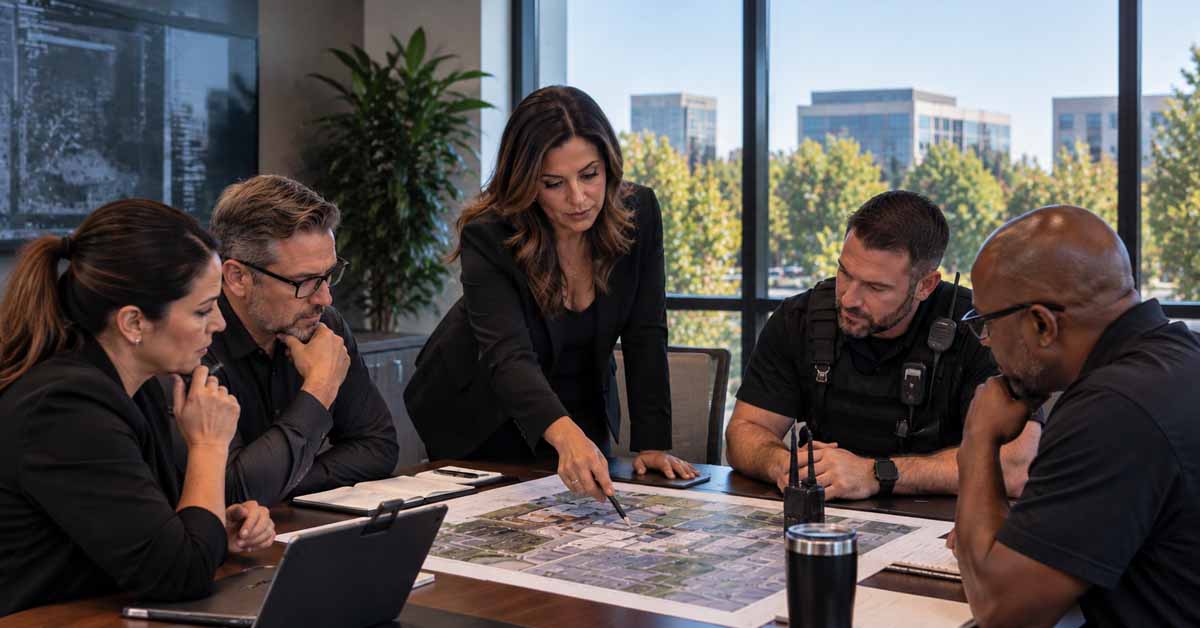
Question V: Have you practiced a realistic disruption?
Set aside 20 minutes at your next management meeting. Include the people responsible for the building, employee communications and security. Give them this scenario:
It is 4:45 p.m. The building loses power. Your primary manager is unreachable, several visitors are still inside and the next shift is due to arrive.
Ask everyone to explain their first actions, using the current plan. Who checks for immediate hazards? Who contacts the appropriate emergency or utility service? How are instructions shared? How will arriving employees know what to do?
This is a discussion exercise, not an instruction to evacuate during every outage. The response depends on the hazard, your site procedures and official direction. The purpose is to find unanswered questions while you have time to resolve them.
Record each gap, assign someone to fix it and set a deadline. Revisit the scenario after those changes. A useful exercise should leave your team with fewer assumptions and clearer instructions.
Our Challenge to You: Make one improvement before September ends.
You do not have to solve every preparedness issue in one meeting. Start with the question that produced the most hesitation. Update the contact list. Clarify the officer’s assignment. Walk the exit route with the evening shift.
Then make sure the change reaches the people who will rely on it.
At Guardian Protection Force, Security Through Intelligence™ means thinking through the details that affect how people respond. Our armed security, executive protection and security consulting services support clients across Northern California, including Sacramento, Rancho Cordova, Stockton, Tracy and Mountain View.
If this review raises questions about your physical security plan, let’s talk about your property, your people and where additional support would help.



0 Comments